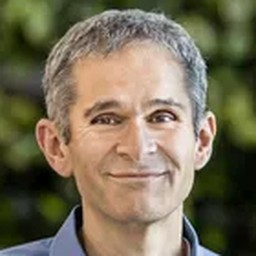
Amin VahdatAmin Vahdat
Chief Technologist for AI Infrastructure, Google · TPU & datacenter networksChief Technologist for AI Infrastructure, Google · TPU & datacenter networks
chips
Computer scientist (UC Berkeley PhD, formerly a professor at Duke and UC San Diego) who joined Google in 2010 and built much of the machinery underneath its AI: the Jupiter datacenter network, the cluster infrastructure, and the TPU systems that train and serve Gemini. In December 2025 Google named him Chief Technologist for AI Infrastructure, reporting directly to Sundar Pichai, as annual capex passed $90B. He introduced the seventh-generation Ironwood TPU (9,216-chip pods, 42.5 exaflops) in 2025 and, at Cloud Next in April 2026, an eighth generation split into two chips: TPU 8t for training, with 9,600-chip superpods and 2 PB of HBM, and TPU 8i for inference. His recurring argument is that FLOPS is a vanity metric; what matters is goodput per watt, won by co-designing chip, network, software and power as one machine.
Computer scientist (UC Berkeley PhD, formerly a professor at Duke and UC San Diego) who joined Google in 2010 and built much of the machinery underneath its AI: the Jupiter datacenter network, the cluster infrastructure, and the TPU systems that train and serve Gemini. In December 2025 Google named him Chief Technologist for AI Infrastructure, reporting directly to Sundar Pichai, as annual capex passed $90B. He introduced the seventh-generation Ironwood TPU (9,216-chip pods, 42.5 exaflops) in 2025 and, at Cloud Next in April 2026, an eighth generation split into two chips: TPU 8t for training, with 9,600-chip superpods and 2 PB of HBM, and TPU 8i for inference. His recurring argument is that FLOPS is a vanity metric; what matters is goodput per watt, won by co-designing chip, network, software and power as one machine.
在关系图谱中查看 Amin Vahdat →View Amin Vahdat in the graph →
听 Amin Vahdat 的 AI 播客 →Listen on AI Podcast →